GNSS interference report: Russia – Part 3 of 4: Moscow and major urban zones
 Written by
Spire Global
This four‑part series delivers concise, data‑backed snapshots of GNSS interference activity in and around Russia.
Each installment pairs open‑source reporting with Spire’s LEO-based constellation, providing decision‑grade insight that goes well beyond public jamming maps like gpsjam.org.
Part 3 examines GNSS interference in and around Moscow, where jamming activity intensified in the spring of 2025 amid growing concerns over long-range UAV threats. Drawing from Spire Aviation’s satellite-based GNSS monitoring and open-source flight data, this section highlights how Russia’s urban jamming deployments, particularly around national events like Victory Day, are disrupting civilian airspace and revealing a broader shift in electronic warfare strategy.
Moscow and major urban zones
While much of Russia’s GNSS electronic warfare (EW) activity remains concentrated near the frontlines and contested regions, a growing share of interference is now appearing in major urban centers, with Moscow at the core.
Amid heightened fears of Ukrainian long-range drone attacks, Russia has increasingly deployed mobile and fixed GNSS jamming systems throughout its capital. These deployments often coincide with national holidays, security alerts, and known periods of UAV incursions, effectively converting the capital into a contested airspace with intermittent GNSS denial.
Summary
- Location: Moscow & surrounding airspace
- Activity: GNSS jamming, cellular interference, and urban-scale electronic warfare deployments
- Date highlight: May 2025 – widespread deployment of jamming equipment in central Moscow due to heightened drone threats
- Impact zones: Central Moscow, airports (Vnukovo, Sheremetyevo), adjacent restricted airspace, urban zones around the country
Real-world incident
In the weeks leading up to Russia’s Victory Day celebrations on May 9th, 2025, a clear pattern of GNSS interference emerged over Moscow and its surrounding airspace. Driven by rising fears (and reported incidents) of Ukrainian UAV strikes targeting symbolic and military assets in the capital, Russian forces initiated a wave of urban-scale electronic warfare deployments that temporarily disrupted civilian navigation and air traffic.
Phase 1: escalating drone threats (April 25 – May 7, 2025)
Open-source reports from AeroTime and Insider Paper confirmed a wave of long-range Ukrainian drone attacks targeting Moscow and surrounding regions in the weeks leading up to Victory Day on May 9th – one of Russia’s most important secular holidays.
Key drone strikes on May 7th included the Shaykovka Air Base in Kaluga and the Kubinka Air Base near Moscow. The pro-Russian Telegram channel Fighterbomber acknowledged the symbolic intent of the Kubinka strike, suggesting it aimed to disrupt the aerial segment of the parade.
Flight operations were suspended at Vnukovo, Domodedovo, and Zhukovsky airports, with over 100 cancellations, 140 delays, and widespread diversions to St. Petersburg’s Pulkovo Airport. Russia’s Defense Ministry claimed 524 drones were intercepted nationwide on May 7th and 8th, marking the largest single UAV barrage since the start of the war.
Telemetry data from GPSjam.org showed stable, and sometimes growing, GNSS interference in and around Moscow between April 30th and May 6th, aligning with escalating drone alerts and airspace closures.
Phase 2: peak interference during victory day (May 7–9, 2025)
As the Victory Day parade approached, an event attended by foreign leaders and featuring coordinated military flyovers, authorities seemingly escalated GNSS interference efforts across Moscow and throughout the region. High-powered jammers were reportedly deployed near the Kremlin, key government ministries, and all three major airports near Moscow.
These measures coincided with full-scale emergency airspace restrictions under Russia’s Kovyor plan, which halts all civilian flights when unidentified aerial objects are detected. The result was a sweeping impact on commercial aviation and urban mobility.
According to Insider Paper and AeroTime, more than 60,000 passengers were affected by grounded or delayed flights in and around Moscow during this period. Airports saw dozens of cancellations and hours-long shutdowns as air defense units responded to continued drone threats.
Telemetry data from GPSjam.org, from May 7–9, shows an increase in ADS-B flight disruptions, forming overlapping jamming zones throughout Moscow airspace. The intensity of the interference aligned with major parade events, especially during high-traffic periods, suggesting the use of short-duration, high-power jamming pulses intended to secure the airspace without extended shutdowns of critical systems.
These concentrated jamming windows also overlapped with commercial aviation corridors, raising risks for aircraft operating on legacy GNSS-reliant systems and requiring rerouting, visual flight rule fallback procedures, or reliance on backup inertial navigation systems.
Phase 3: post-celebration residual jamming (May 10–20, 2025)
In the days following Victory Day, GNSS interference in Moscow persisted but appeared to become less severe, and at times, it was localized around federal buildings, government zones, the MKAD (Moscow Ring Road), and other urban areas around the country.
These reactivations suggest the deployment of semi-permanent or mobile jamming platforms, such as truck-mounted EW systems or containerized field units. Rather than a continuous blanket of interference, the post-event pattern indicates a responsive jamming posture – activated during perceived threats, intelligence alerts, or shifts in aerial surveillance patterns.
The continued disruption also mirrors broader Russian electronic warfare doctrine, which increasingly treats major urban centers as defensible electronic zones during high-alert periods.
Spire satellite validation
What Spire saw
In the lead-up to Russia’s Victory Day celebrations on May 9th, 2025, Spire Aviation’s satellite-based GNSS monitoring revealed a three-phase pattern of electronic warfare over Moscow: a sustained baseline of GNSS interference, a sharp tactical escalation surrounding Victory Day, and a prolonged period of residual jamming in the days that followed.
Unlike static jamming events seen elsewhere, Moscow’s interference profile during this time was dynamic and coordinated, likely shaped by political optics, military activity, and growing threats from Ukrainian drone incursions. By analyzing percentile-based signal degradation (NACp_q05) alongside changes in aircraft behavior, Spire Aviation was able to isolate when and where interference evolved from persistent background noise into a targeted operational tool.
Phase 1: escalating drone threats (April 25 – May 7, 2025)
From April 30th through May 6th, Spire Aviation detected continuous GNSS signal degradation across central and western Moscow, including the Kubinka corridor, where Ukrainian drones struck military airbases. Each day, more than 2,500 unique hexes exhibited degraded positioning or signal integrity (nacp_q05 = 0), with over 1 million GNSS telemetry data points observed operating within these affected zones over the course of the week.
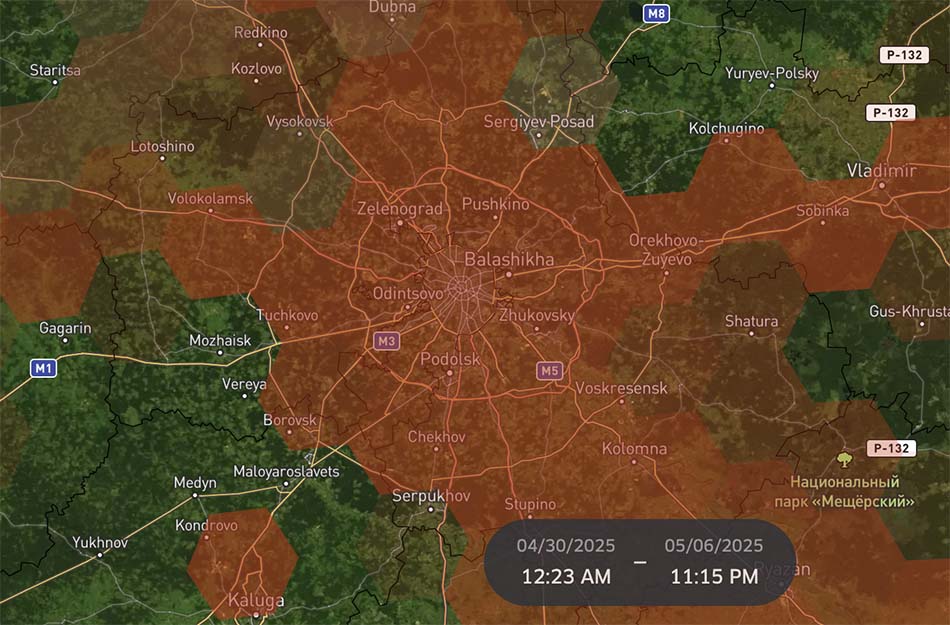
Figure 1: Spire Aviation GNSS interference data in and around Moscow from April 30 – May 6, 2025
Phase 2: peak interference during victory day celebrations (May 7–9, 2025)
In the days surrounding Russia’s Victory Day celebrations, Spire Aviation’s GNSS monitoring detected not only sustained interference but a stark concentration of signal degradation affecting a high volume of aircraft over a narrow urban footprint.
To isolate the core disruption zone, we filtered GNSS degradation (NACp_q05 = 0) by aircraft count within each hex. As the threshold of impacted aircraft increased – from 20 to 40, 60, and finally 100 – the geographic distribution of degraded zones collapsed inward, revealing a probable epicenter of jamming.
This concentric collapse points to a centralized, high-power jamming source operating in or near Zelenograd, northwest of central Moscow, during the peak interference window.
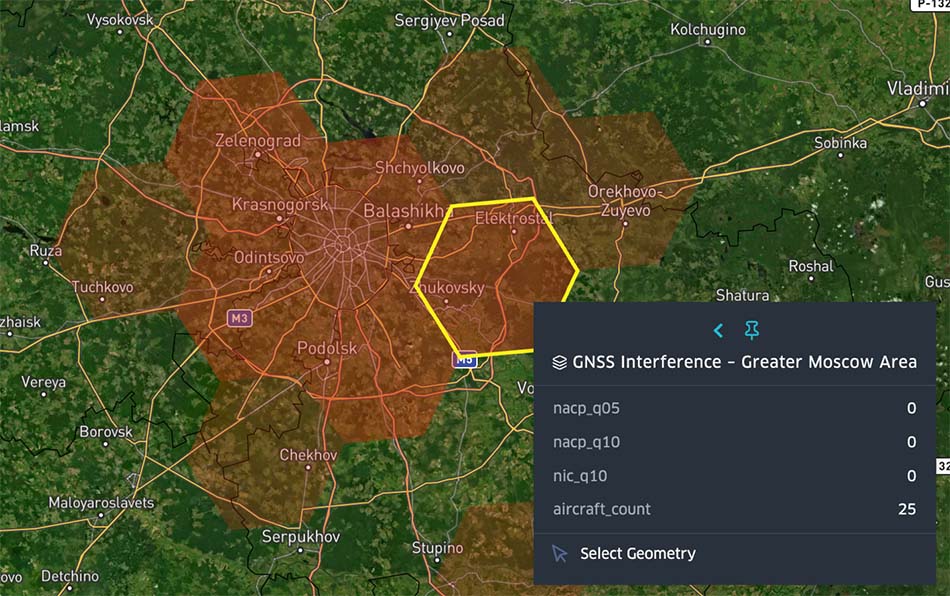
Figure 2: Spire Aviation GNSS interference data in Moscow from May 7 – 9, 2025 (NACp_q05=0, aircraft count > 20)
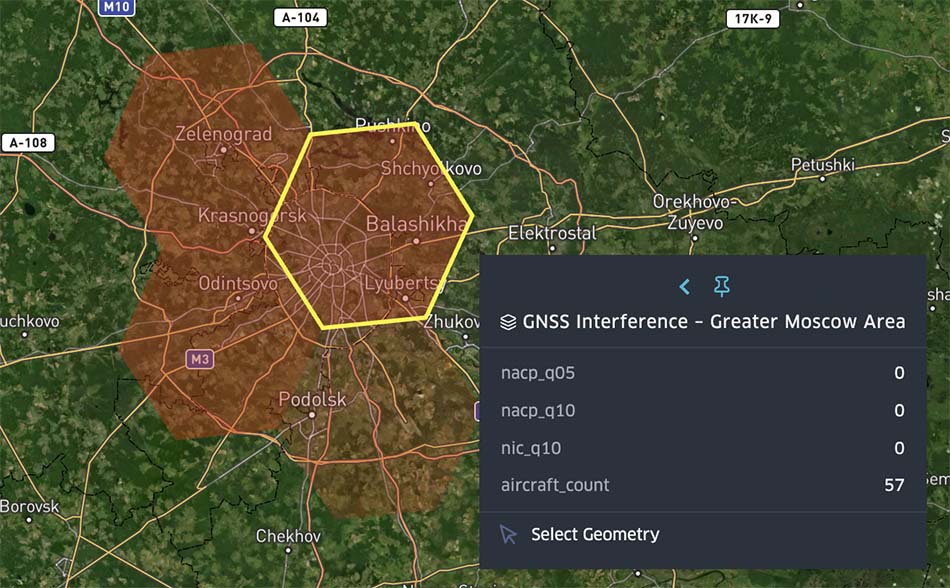
Figure 3: Spire Aviation GNSS interference data in Moscow from May 7 – 9, 2025 (NACp_q05=0, aircraft count > 40)
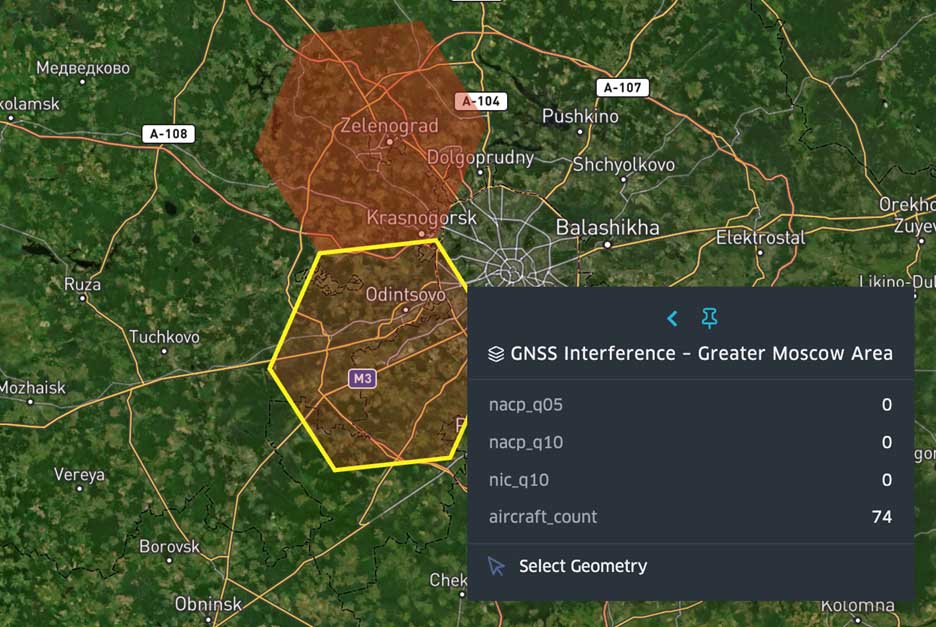
Figure 4: Spire Aviation GNSS interference data in Moscow from May 7 – 9, 2025 (NACp_q05=0, aircraft count > 60)
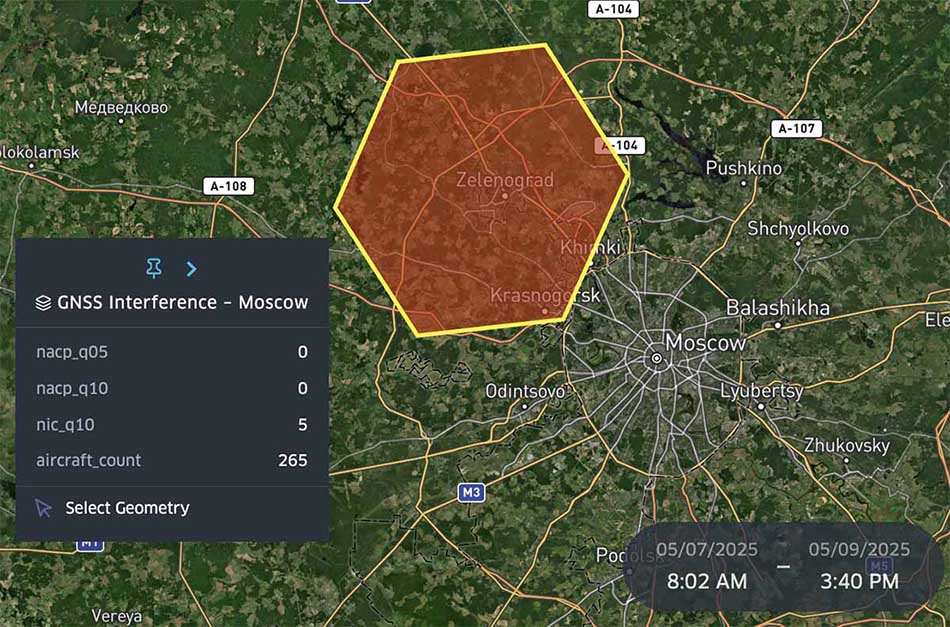
Figure 5: Spire Aviation GNSS interference data in Moscow from May 7 – 9, 2025 (NACp_q05=0, aircraft count > 100)
This behavioral signal, when paired with the drop in GNSS telemetry volume during May 5–7, suggests not only widespread jamming but deliberate signal saturation over critical airspace. The tactical precision of this escalation, centered around Moscow’s most symbolic holiday, aligns with prior state responses to perceived threats from UAVs and validates the strategic nature of GNSS disruption as a tool of information warfare.
While the Victory Day parade itself took place in Red Square, the historic center of Moscow, Spire Aviation’s data shows that the highest GNSS disruption was concentrated further northwest, near Zelenograd. This geographic offset suggests a layered defense strategy: rather than broadcasting jamming directly over the Kremlin, Russian forces likely positioned high-power emitters along probable UAV routes. The spatial collapse of interference zones toward this location reinforces the use of GNSS disruption as a perimeter-based countermeasure to shield critical infrastructure from aerial threats.
Phase 3: post-celebration residual jamming (May 10–20, 2025)
While Moscow remained the focal point of Victory Day interference, Spire’s satellite data from April 30th to May 20th reveals that GNSS jamming did not subside; it dispersed and persisted. In particular, urban areas across central and eastern Russia exhibited elevated GNSS degradation after the Victory Day celebration, with more than 40 aircraft per hex impacted by total loss of positional accuracy (NACp_q05 = 0).
The images below show the contrast in interference between the week leading up to Victory Day and the week after.
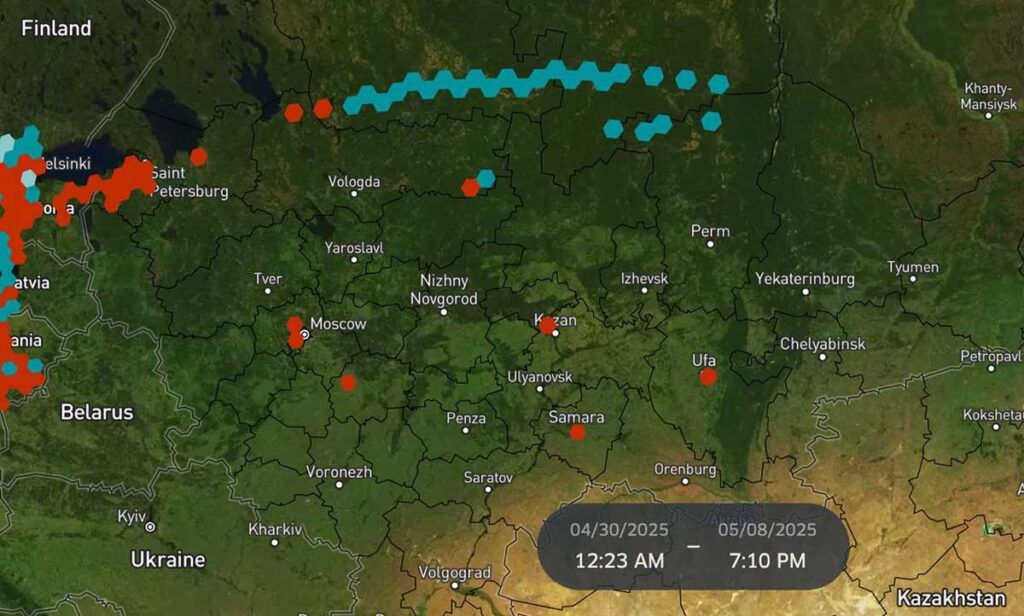
Figure 6: Spire Aviation GNSS interference data in urban zones from April 30 – May 8, 2025 (NACp_q05=0, aircraft count > 60)
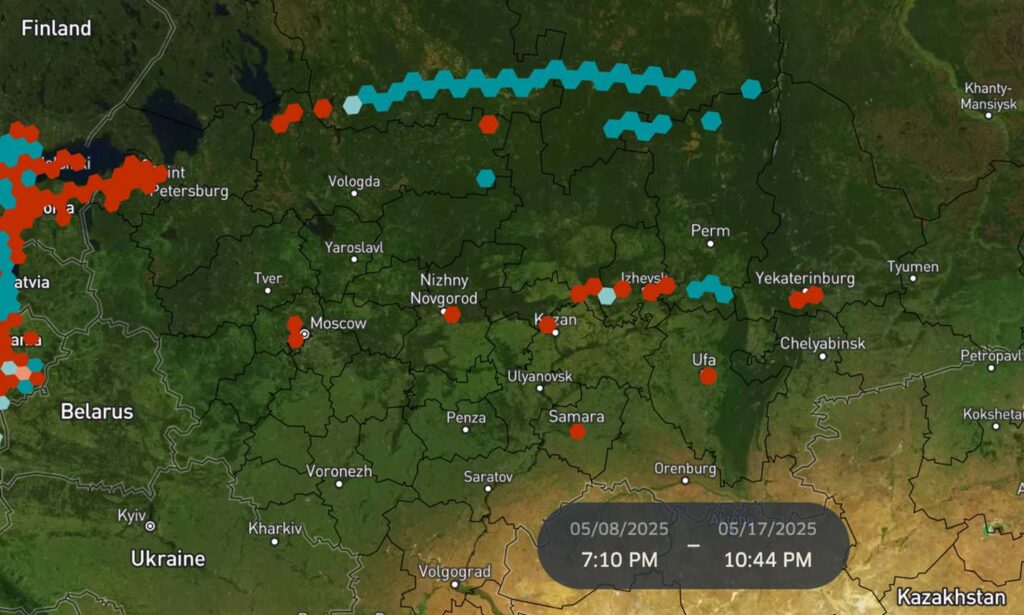
Figure 7: Spire Aviation GNSS interference data in urban zones from May 8 – May 17, 2025 (NACp_q05=0, aircraft count > 60)
The contrast between these two periods shows that GNSS interference did not subside after the May 9th holiday – it persisted, with sustained jamming activity observed across multiple urban centers well beyond Moscow.
This continuity becomes more telling when viewed alongside recent UAV strike data. Several of the cities that experienced continued or elevated interference between May 10th and 20th had also been targeted by drone attacks earlier in the year, suggesting that GNSS interference is being used as an ongoing countermeasure in regions deemed vulnerable to aerial threats.
Kazan (January 2025)
Between May 9th and May 20th, Spire satellite telemetry shows persistent GNSS jamming in Kazan’s urban airspace, with over 40 aircraft per reporting hex losing positional accuracy (NACp_q05 = 0). While it’s not confirmed with total certainty, this localized interference is observed months after a drone strike on a key facility located in Kazan.
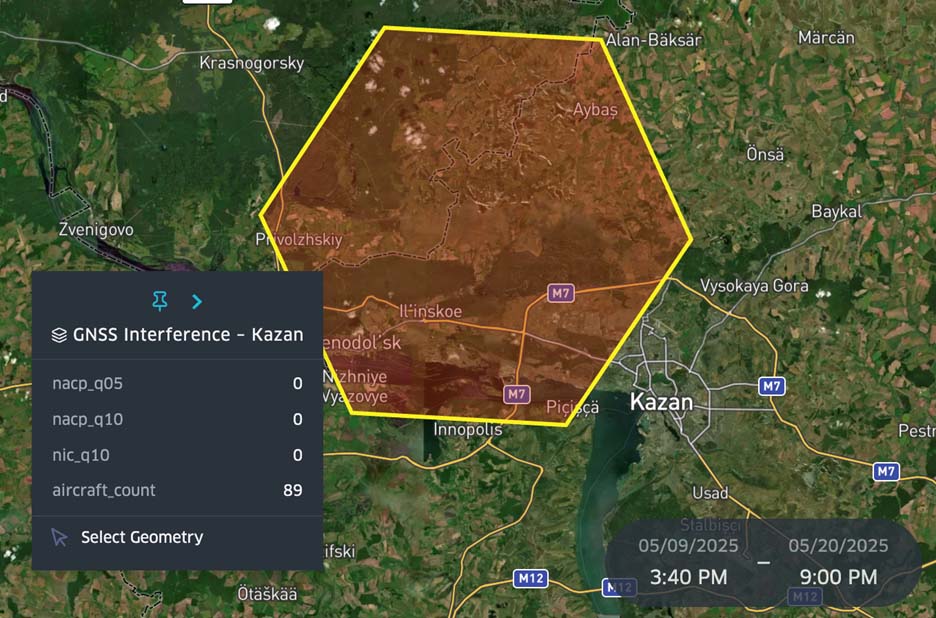
Figure 8: Spire Aviation GNSS interference data in Kazan from May 9 – 20, 2025 (NACp_q05=0, aircraft count > 40)
On January 20, 2025, kamikaze drones targeted the Kazan Aviation Plant, a facility central to the production and modernization of Russia’s Tu-160 and Tu-22M3 strategic bombers. The strike occurred around 5 a.m., reportedly causing an explosion and fire on the factory airfield. Although local officials claimed all drones were intercepted and no infrastructure was damaged, open-source imagery analysis indicated that fuel tanks near the KAPO-Composite hangar were hit. This hangar specializes in the manufacture of composite components for long-range bombers and civilian aircraft under the Tupolev design bureau.
The strike’s location, deep within Russian territory, underscores the evolving reach of Ukrainian UAV operations. Its target selection suggests a deliberate attempt to disrupt high-value military-industrial capacity. The presence of renewed GNSS jamming in Kazan’s airspace months after the incident points to a lingering defensive response. It reflects a broader trend in which electronic warfare assets are being repositioned in direct response to UAV threats, reinforcing the idea that GNSS denial is no longer confined to ceremonial events or border regions but a persistent urban countermeasure in strategically sensitive zones.
Ufa (March 2025)
Between May 9th and May 20th, Spire Aviation data shows consistent GNSS interference over Ufa, with multiple urban hexes reporting complete positional loss (NACp_q05 = 0). This jamming activity follows a drone strike on one of Russia’s most strategically significant oil refineries.
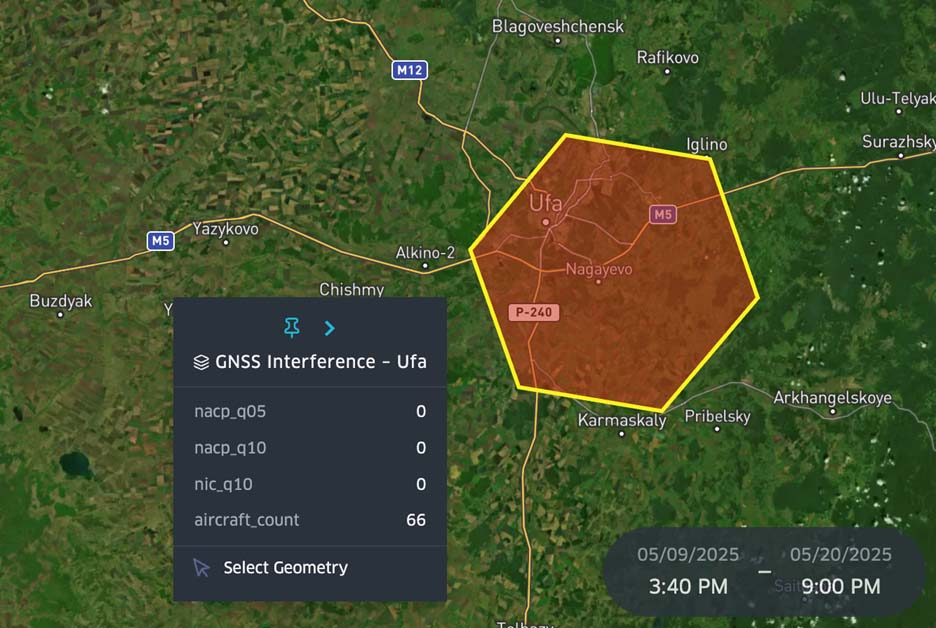
Figure 9: Spire Aviation GNSS interference data in Ufa from May 9 – 20, 2025 (NACp_q05=0, aircraft count > 40)
In the early hours of March 4, 2025, local emergency services in Ufa reported a fire at the Ufa oil refinery, one of the largest in Russia, with an annual capacity of around 20 million tons. While Russia’s Ministry of Emergency Situations acknowledged the fire, it did not specify a cause. No casualties were reported, and the blaze was reportedly extinguished after seven hours.
However, Ukrainian official Andriy Kovalenko publicly described the incident as a UAV strike, stating that the facility plays a critical role in fueling Russia’s military – producing aviation fuel, diesel for armored vehicles, and essential lubricants for both ground and air operations.
Russia’s Defense Ministry did not acknowledge any aerial activity over Ufa, but it did report intercepting seven Ukrainian drones elsewhere that same night. The lack of attribution, combined with open-source claims of a strategic hit, points to growing uncertainty (and concern) over Ukraine’s ability to strike deep into Russian territory.
Spire’s interference data suggests a localized, post-strike electronic warfare response, consistent with a broader trend of GNSS denial emerging in cities linked to military infrastructure or prior UAV incidents. In Ufa’s case, the timing and concentration of jamming reinforce the view that Russia is maintaining an elevated defensive posture in zones it now considers vulnerable.
Samara (March 2025)
Spire Aviation’s satellite data shows elevated GNSS interference in Samara’s airspace from May 9th to May 20th, with hexes indicating total positional loss (NACp_q05 = 0) and more than 40 aircraft impacted in some zones. This activity followed a reported drone strike in March on the Novokuibyshevsk oil refinery, one of the region’s largest industrial facilities and a known supplier of military-grade fuel.
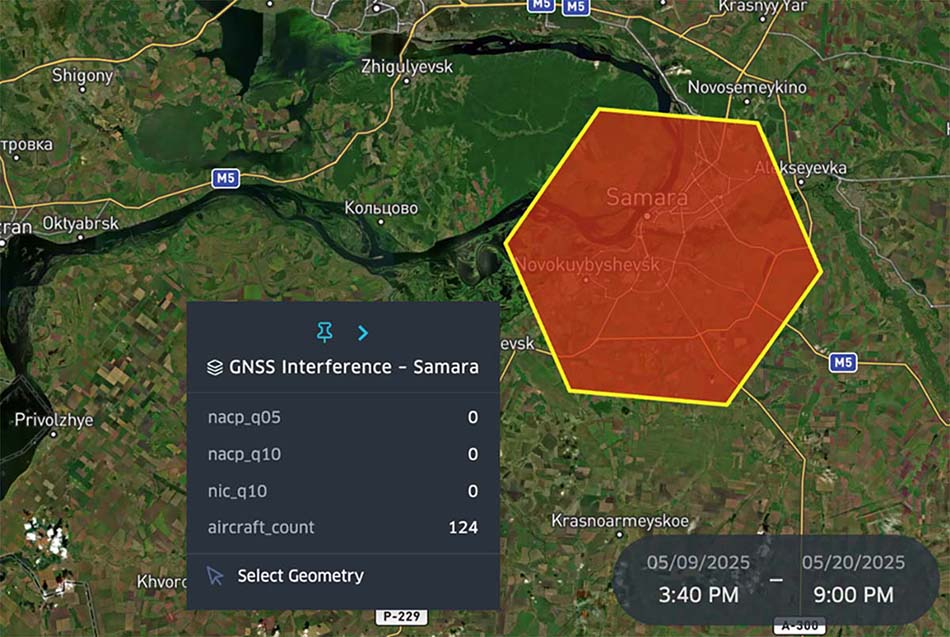
Figure 10: Spire Aviation GNSS interference data in Samara from May 9 – 20, 2025 (NACp_q05=0, aircraft count > 40)
On March 10, 2025, Ukrainian drones reportedly struck the refinery, which has a capacity of up to 8.8 million metric tons annually and is operated by Rosneft, Russia’s state-owned oil giant. While the Samara governor downplayed the incident, claiming no damage or fire occurred, Russia’s Emergency Situations Ministry contradicted this with video evidence showing firefighters battling flames inside a warehouse. Ukrainian officials, including spokespeople from the National Security and Defense Council, confirmed that the refinery was the intended target and emphasized its strategic role in fueling Russia’s military operations.
The timing and location of the strike underscore Ukraine’s continued effort to disrupt key energy infrastructure linked to the war effort. The recurrence of GNSS interference in Samara’s airspace two months later suggests a sustained defensive posture in response to that vulnerability. As with Kazan and Ufa, the interference aligns with previous UAV activity and reflects Russia’s apparent shift toward localized, threat-responsive jamming around critical infrastructure nodes.
The impact of Spire’s satellite data
Spire Aviation’s LEO-based GNSS monitoring provides not only confirmation of jamming activity across Russia’s urban centers but also granular insight into its operational footprint, timing, and escalation pattern. By using percentile-based signal degradation (NACp_q05) and applying aircraft count filters to identify only statistically significant interference zones, Spire is able to detect, visualize, and timestamp GNSS disruption as it unfolds, all without reliance on government or ground-based sources.
This capability proves especially valuable in contested information environments, where denial, misdirection, or delayed attribution are common. Spire Aviation’s data helps understand when jamming is being deployed reactively, proactively, or symbolically, and helps to isolate potential emitters based on geographic collapse patterns, interference density, and correlation with high-value targets or strategic infrastructure.
Pinpoint GNSS interference. Protect flight operations.
Access real-time global visibility into GNSS jamming using Spire’s satellite-based ADS-B data. Stay informed, stay safe.
Interference pattern and attribution
The pattern emerging from spring 2025 suggests a clear evolution in Russian electronic warfare doctrine. GNSS jamming, once primarily deployed along frontlines or during ceremonial state events, is now appearing in major urban centers in direct response to UAV threats. In Moscow, this manifests as preemptive signal denial around holidays like Victory Day. In Kazan, Ufa, and Samara, jamming reappears weeks or months after confirmed or suspected drone strikes, implying a defensive repositioning of mobile EW assets.
In several cases, Spire Aviation’s data shows interference originating not at the strike site itself, but at likely UAV approach corridors, hinting at perimeter-based jamming strategies intended to confuse or block drone navigation systems before they reach high-value targets.
Attribution of interference events to specific platforms remains complex. However, the concentric collapse of aircraft-affected hexes seen near Zelenograd and the post-strike reactivation patterns observed in multiple cities strongly suggest the use of mobile, possibly truck-mounted or containerized EW systems with tactical jamming range, rather than broad, indiscriminate denial fields.
Operational impact
The effects of GNSS interference across Moscow and other urban zones in spring 2025 were both civilian and strategic. For commercial aviation, the disruptions were immediate and visible. Aircraft operating within the affected airspace experienced degraded positioning, in some cases requiring rerouting or reverting to fallback navigation procedures such as visual flight rules or inertial systems. During the Victory Day period alone, more than 60,000 passengers were impacted by flight cancellations, delays, and diversions, including partial shutdowns at Moscow’s Vnukovo and Domodedovo airports.
At the strategic level, GNSS jamming appears to serve a dual function: both as a deterrent against UAV incursions and as a masking tool for Russian military activity. By denying signal access across critical airspace, Russian forces can inhibit drone navigation while simultaneously concealing the movement or deployment of sensitive defense systems.
Get in touch to explore Spire’s GNSS‑interference data feed or request a demo:
Continue reading our GNSS interference report series
01: GNSS interference report: Russia – Part 1 of 4: Kaliningrad & the Baltic Sea
02: GNSS interference report: Russia – Part 2 of 4: Crimea and the Black Sea Region
03: GNSS interference report: Russia – Part 3 of 4: Moscow and major urban zones (current)
04: GNSS interference report: Russia – Part 4 of 4: Black Sea & Romanian airspace